Current Books
ON WILDLAND FIRE
The wind blew gently in the night on Cabazon Peak, a barren and uninhabited pile of rock and chaparral in the narrow Banning Pass, a legendary fire ground and the main east-west artery into Southern California. At this hour, a touch past one on a warm October night, the bulky outline of Cabazon Peak glowed with a false dawn. Before first light, the glow would become a raging wildfire, the Esperanza Fire, and the gentle flow of air would be replaced by a Santa Ana wind, ripping through the narrows of the Pass, turning a running fire into an exploding inferno. And five firefighters, the crew of Forest Service Engine 57, would die while protecting a home called "The Octagon" on an exposed knoll overlooking the Pass.Two-and-a-half years later, Raymond Oyler, a local garage mechanic with a record of minor drug offenses, would stand in the dock in Riverside County criminal court, charged with deliberately setting the fatal Esperanza Fire and more than 20 other fires that year. The five deaths were the first time an entire Forest Service engine crew had been wiped out. Oyler's conviction and death sentence, after a two-month trial, was a first as well -- the first time, so far as it's known, that anyone had been convicted of first-degree murder for setting a wildland fire.

The drama of the Esperanza Fire and the Oyler trial is far from over. Questions about and lessons from the Esperanza Fire are still being debated in the fire world and in the broader community. Engine 57 was in a bad place -- on that point no one disagrees. But should the crew have known how bad it was and retreated in time? Should there be more questioning about how we fight wildfires in an incendiary place like Southern California, where homes and wildlands are routinely mingled? Engine 57, for example, was not sent to fight the fire; it was sent to help evacuate civilians and defend homes and other structures from flame. Fire agencies and firefighters must be willing to do those jobs in spite of the dangerous conditions. But what are the limits?
A pending federal report on the fire may -- or may not -- help answer some of the questions. But Raymond Oyler is another matter. Will he ever face execution? Did the death penalty help heal the wounds Oyler caused? Court officials say it will be a decade or more before the automatic appeal of his death penalty begins. And no one has been executed in the state since 2006. So why did the State of California fight so hard to put him on Death Row? It's a costly, emotional, and time-consuming process. The prosecutors say they had good reasons for seeking the maximum penalty, though they acknowledge it may never be applied. So, what are their reasons?
![]()
John Maclean, award-winning author of three previous books on wildfire disasters, has taken on these and other questions for an upcoming book on the Esperanza Fire. Maclean first visited the site of the fire in 2007, the spring after it occurred, and he has returned many times since. He covered the lengthy Oyler trial in Riverside and continues with further research and interviews; as yet there is no scheduled publication date for the book.
Maclean's first book, Fire on the Mountain, about the South Canyon Fire of 1994 on Storm King Mountain in Colorado, will be reissued in a modern classics edition in December, 2009, by Harper Collins Perennial.
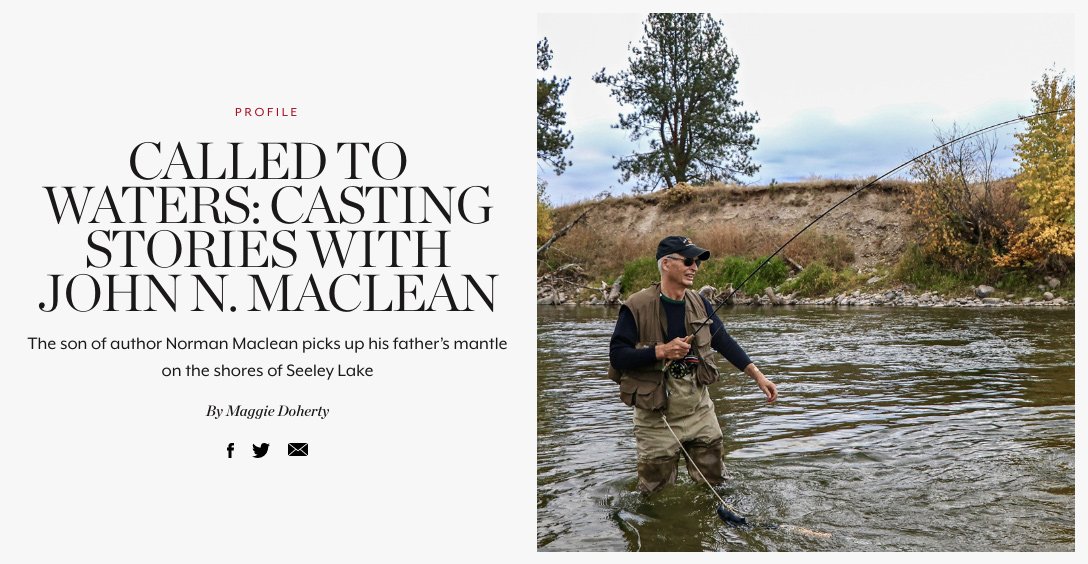
Maclean is both a journalist and a gifted storyteller; he spent much of a 30-year newspaper career in Washington, D.C., as a Chicago Tribune correspondent covering national and international news. He is a frequent speaker at wildfire academies and other gatherings, and is a member of the Seeley Lake Volunteer Fire Department in Montana. For a man whose early career was in the Midwest and then the nation's capital, Maclean's still a Western boy, linked by his family's ties to Montana, where he spent much of his youth.